
Making Memories

Anybody who has seen the movie Alien cannot forget the scene where they try to cut the face-hugger off John Hurt, only to discover it has concentrated acid for blood. It burns through the deck, so they run down below to see it burning through to the next deck, and the next, and the next. It stops just before it eats through the hull and vents into space. Great scene.

Except when you experience it yourself.

The other night Izzie was sitting in my lap while I was feeding her when I suddenly thought, ‘Why does my general groin area feel damp?’ It turned out that Izzie had peed, and it had somehow made its way through her nappy, through her vest, her leggings and her dress, through my shirt, through my jeans, through my underwear and to my skin. She doesn’t have urine in her bladder: she has some super powerful alien pee that cuts through whatever you put in the way to stop it. I thought showering vomit out of my armpits was bad; washing your daughter’s pee off your man-parts in the sink is something else altogether!

But now I’ve written it, this story will be remembered. That is my revenge. It will be resurrected in years to come whenever Izzie needs a little embarrassing, and should she wish to know what she was like as a baby.

The same can’t be said for my origins. All I know about my birth is that my mother didn’t form placentas properly, something she found out when my brother was born weighing three pounds, so when she fell pregnant with me she had injections to give me extra nourishment in the womb. My dad missed my brother’s birth so was adamant he’d be there for mine. During labour the midwife told my dad it’d be hours before I arrived so he should go to the canteen and get a cup of tea. Five minutes later I popped out, and I’ve been disappointing him ever since.

Having had a baby, I want to know more. What exactly were these injections? Where did they go? How long was the labour? What pain relief did she use? How did they feel when they first saw me? And afterwards, what was I like as a baby? How was I over the first few weeks? I want info!

Unfortunately, my parents can’t remember anything beyond the fact that I was a miserable sod who made their lives a living hell. For one thing, it was thirty-five years ago; for another, in the blur of nappies, feeds, a jealous toddler, and moving house two weeks after I was born, all the colourful little details that put flesh on the bare bones of the story weren’t committed to memory, so were lost.

I’m not unusual in this. Asking around, it seems that for most of us, our early years are a hazy dream, some facts with very little context and a couple of out-of-focus photographs of us being held by people with bad haircuts and worse clothes. In those days, before paternity leave, when men’s involvement with babies started and ended with ‘breadwinner’ and they left the women to raise the kids, when the most technical thing in the house was a calculator and everything was written by hand, dishwashers were for the rich and microwaves cost the moon, it’s only to be expected that they spent their time trying to survive, not recording the minutiae of my life.

In today’s day and age, there’s no excuse. Apps, blogs, e-mails, Facebook, Twitter; cameras and notepads and recording devices built into your phone; it takes just a couple of minutes a day to make sure that nothing is forgotten.

All those little idiosyncrasies you love right now, the funny faces, the amusing behaviours, those precious features that make your baby so uniquely yours, can easily be lost in the fullness of time. As our children cannot remember this time themselves, it falls to us, their parents, to remember for them: the way Izzie stares at a point over my shoulder when I feed her, making me paranoid someone is sneaking up behind me; the way she grabs my bottom lip and tries to twist and pull it off; and the way she reaches one fist above her head and stretches out her body as though she thinks she’s Superman. The stories we tell now need preserving for posterity.

In years to come, when they hate us and wish we were dead, when they’re pushing our buttons and making us insane and we can’t think what on earth ever possessed us to have kids in the first place, we need to remember how we feel now, the love that binds us all together, and all the little things that make it worthwhile. Because this is the best thing we’ve ever done.

We owe it to them to make memories of this time. We also owe it to ourselves.
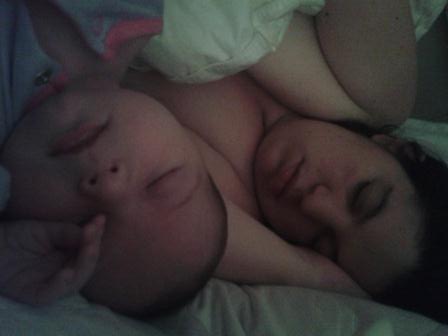
The Baby Expert

New parents beware: sightings of the lesser spotted baby expert are at an all time high. Found in streets, parks, shops, pubs and your own home, as well as on the internet, this genus of the family interferus feeds by offering unsolicited advice and passive-aggressive criticisms of your parenting techniques. They are best avoided when tiredness makes it harder to hold your tongue, though as babies attract them, there is no known repellent that works.

The lesser spotted baby expert can be further divided into a number of species: the judgemental acquaintance overfamiliarus, the childless spinster that used to be a nursum, the earth mother organica, the internetus anonymous, the never had kids but I have strong opinions on the subjectumthe my daughter/friend/hairdresser/person I saw on TV had it much tougher than you but they’re still breastfeedingo, and, possibly the most pernicious of all, the had a baby forty years ago and in my day we did it like this and even though it goes against everything the midwives and health visitors and paediatricians say it didn’t do our kids any harmus. This last, often known by their common name of ‘Lady Macbeths’, can become quite offended if their advice is not immediately heeded without question. Best fobbed off with the line, ‘We’ll consider it.’

Unfortunately for the would-be baby expert watcher, no two have the same song. Use a dummy, sings one; never use a dummy, sings another. Teach her to suck her thumb; don’t let her suck her thumb. Cure constipation with laxatives; don’t use laxatives, give her boiled water; change to a different formula; use orange juice; yoga; massage; a cotton bud up the backside. Hold her like this; like this; like this. She’ll be too hot; too cold; too much sun; not enough sun; let her sleep; you have to wake her; you’re feeding too much; you’re feeding too little; too often; not often enough; make her sleep in her cot; she’s okay in your arms; she’s having too much stimulation; she needs more. This makes things rather confusing, and not a little annoying.

What the new parent must remember upon being accosted by the lesser spotted baby expert is that these creatures are experts on their babies, and on babies in general, but they are not experts on your baby. And while they insist on getting involved, the only people responsible for your baby, the only people qualified to make decisions that affect your baby, and the only ones who will have to deal with the consequences of those decisions, are you, the parents. The baby expert will fly away when it detects the scent of another baby elsewhere, and the parent must be able to look themselves in the mirror each morning, or evening, or whenever in the day they can find the time to look at themselves in the mirror, and be comfortable with the decisions they’ve made, and know they made them for the right reasons and not because the baby experts browbeat them into compliance. If you can’t justify it to yourself, just don’t do it.

Libraries are full of what other people think – all that matters is what you think. So during this upcoming season, watch out for the lesser spotted baby expert. It can be a nuisance, but it is more noisy than harmful. And if it gets too much, there’s no harm in reminding it that you are the only expert on your baby whose opinion matters.

Perspectives

I don’t want to go all New Age tree-hugger on you, but having a baby changes your perspective. As someone set in his ways, and a bit of a cynic with it, I figured my attitudes wouldn’t change much – none of that wishy-washy heal-the-world tosh. But loathe as I am to admit it, having a baby alters your perspective on things you were sure you had pegged.

That national treasure known as the NHS, for example. From the perspective of one who’s never used it, it’s the best of Britain, albeit sadly dying under the dual weights of lack of funding and mismanagement. From the perspective of a dad who spent a week visiting his newborn daughter and her mother, it’s already dead. I can’t fault the staff that work there, but one midwife covering a ward of twenty-five beds? That’s not just dangerous understaffing, it borders on criminality!

My perspective has changed on people too. Some of the ones I thought before the birth would be the greatest help have been conspicuous only by their absence, while others I thought were a waste of space have given generously of their time and effort and stepped up to the plate. It’s amazing how a little thing like a baby can bring out the true nature of people. I guess it’s done that to me.

I’ve changed my stance on public breastfeeding. Whenever I heard about somebody being asked to stop breastfeeding in a restaurant, or swimming pool, or public library, I’d go all Daily Mail and agree. ‘Too bloody right,’ I’d think. ‘There’s a time and a place for that sort of thing.’ But after watching Lizzie whip her boobs out in front of all and sundry, and the relief it gives to the baby, I really can’t understand what the fuss is all about.

And single mothers. Let nobody say that being a single mother on benefits is easy. This parenting lark is hard enough with two people, let alone one. So now, when I see a woman on Channel 5 with three kids under four by different dads, instead of right-wing indignation I wonder how she’s able to cope and if she’s getting enough sleep. Before you know it, I’ll be reading The Guardian!

My perspective on my parents has changed too. I look at my little baby, so perfectly formed, so pristine, and I wonder if one day she’ll want to deface her skin, or punch holes in her body parts. I speak as somebody with four tattoos who had his ears, nose and tongue pierced by the age of twenty. I understand now why my parents were so against it. It’s not because they’re culturally-arrested conservatives who can’t appreciate artistic self-expression, it’s because they can’t bear to watch you damage the body they’ve been protecting since the day you were born. Sorry mum and dad – my bad.

There are a host of behavioural changes too. When I’m out driving with precious cargo, I hesitate at junctions and roundabouts, passing up gaps I would have taken four weeks ago because now they seem too risky. It takes me forever to cross a road with the pram, waiting until there’s absolutely nothing coming before I make my move. The cat isn’t even allowed in the same room as Izzie, and when people come to visit I wonder how good their personal hygiene is, and what germs they might be bringing into my home. My perception of risk has changed the world into a significantly more dangerous place.

And my emotions have changed. Never a proud man, when I push the pram I feel a burst of pride; never sentimental, if I see a cute outfit I go all gooey inside and have to buy it; and never possessive of anything in my life, if somebody’s been holding my baby too long, I have to fight the urge to claw their eyes out while screaming, ‘Get your grubby hands off my daughter! She’s mine, mine, mine!’

And along with all these other changes, having a baby has changed my perspective on cliches. I hated all that guff about how ‘you’ll feel differently when you have kids of your own,’ and, ‘until you have a baby you’ll never understand.’ I hate it even more now because, from my perspective, it turns out that it was right.

On Bodily Functions

The procedure for looking after a baby is nowhere near as difficult as you imagine. So long as you’re putting stuff in one end and clearing it up as it comes out the other, the rest mostly takes care of itself. I’ve stopped feeling for Izzie’s pulse every thirty seconds, and I sometimes go a whole hour without checking she’s still breathing. Providing she’s fed, winded and in a clean nappy, there’s not a lot that can go wrong.

So far, so simple. You’d think.

But putting stuff in one end and clearing it up as it comes out the other can be a friggin’ minefield. And when stuff comes out the end it’s meant to be going in, and stops coming out the other, it throws everything out of sync.

We were following a wonderfully modern, touchy-feely thing called ‘demand feeding’. It is exactly as it sounds: you feed the baby when she demands to be fed. Because babies aren’t machines. Sometimes they want a light snack, sometimes a five course dinner followed by an all-you-can-eat buffet. And sometimes they want to take it in their mouth just so they can spit it back out.

I think it’s a fundamentally decent principle. On my travels I met a dreadlocked German girl in a hostel/hippy commune above the ocean who lived by the rhythms of her body. She ate when she was hungry, slept when she was tired, and spent the rest of the time knitting beanie hats, as far as I could tell. She told me to get rid of my watch, listen to my body, because my body knew best and would never steer me wrong. She seemed so in tune with the vibrations of the world I thought I’d give it a try.

I lasted around three hours. Despite what Lizzie might tell you, my body doesn’t talk much, or perhaps I’ve lost that connection with my instinctive animal nature. So I’m all for Izzie keeping in touch with her body’s desires.

Her natural inclination is to cluster feed. That’s where, instead of leaving a few hours between feeds, she wants to feed, feed, feed, with only fifteen or twenty minutes between, and then sleep for five hours, before waking to feed again. Left to her own devices she’d cluster feed all morning, sleep all afternoon, cluster feed again from tea time to early evening, then settle into more regular feeds overnight. It might not be ideal for everyone, but it worked, and other than some griping in the evening, we had a very contented baby.

Except for the constipation. We give her laxatives morning and evening, but still her belly goes rock solid, she lifts her legs, sticks out her tongue and turns purple as she strains to squeeze out a thumb-sized nugget. It’s horrendous to watch, actually, and no matter how many times I put her on her back and do bicycle movements with her legs, it doesn’t seem to help.

The Health Visitor came a few days ago and told us that as we’re no longer breastfeeding, we shouldn’t be demand feeding anymore. Instead, we need to get her into more of a routine, feeding her three or four ounces of formula every three hours. She’ll feel more secure and it’ll help with the constipation too.

Pardon my French, but what utter, total bull-plop!

The last couple of days Izzie’s morphed into a wild beast that claws at our necks, rips glasses from faces, breaks necklaces and grabs collars while screaming at the top of her lungs, and she hasn’t pooped once. Because she doesn’t want to feed every three hours. Between each feed she’s unsettled and agitated. And at night she’s inconsolable.

Friday I fed her at ten and it took until one in the morning to settle her. She woke up three minutes later as it was time for her next feed. Afterwards, she was so unhappy it took till half-two and skin-to-skin for her to stop screaming, whereupon she burped and threw up the whole of the last feed over my bare chest. And because she’d vomited, she was now insatiably hungry again. Showering sticky milk vomit out of your armpits at three in the morning is sure to put you in a bad mood, especially when she’s up at five screaming again!

Last night was just as bad. I’m averaging three hours of broken sleep a night, and perhaps an hour during the day. They say you reach a point where if someone offered you £1000 or a full night’s sleep you’d take the sleep. There’s no contest: I’d take the money and use it to hire a nanny for a whole week of nights.

Since making this change to feeding, Izzie is miserable, Lizzie’s confidence has taken a massive leap backwards, and I’m on the verge of hallucinating about fluffy white pillows and bed linen. Perhaps, in the long term, getting Izzie into a routine is a good thing, but from where I’m sitting, the ‘chaos’ of her natural bodily rhythms was far easier than the vomit and tears of this artificial routine.

The best-laid plans…

After three years of trying for a baby and finding out the odds were stacked firmly against us, we gave up and decided to get a puppy instead. We still wanted a baby, and if it happened one day, it would happen, but in the meantime we would move on with our lives.

The meantime didn’t last very long. Two months, in fact. Then Lizzie was pregnant.

I hadn’t planned to have a one-year-old puppy and four-week-old baby at the same time, but these are the cards we’ve been dealt and the hand we have to play. It’s hard, stressful, and exhausting, but Izzie will grow up with a devoted companion and within a couple of years our spaniel Ozzie will have a friend to play with who has roughly the same ball control skills and ability at maths. Who is to say that the way things have worked out aren’t better than the plans we made?

When you’re having a baby it’s normal to make plans. What I’m discovering, however, is that plans don’t survive contact with babies. The tranquil water birth turned into an operating theatre, the baby harnesses that worked so well with a teddy bear are rubbish for real babies, and ‘sleep when the baby sleeps’ is only good advice for people who can afford cleaners and endless takeout.

The biggest change we’ve had to face is over breastfeeding. Everywhere you look you see posters exhorting that ‘breast is best’. There are countless books, support groups and websites providing practical advice and encouragement; midwives congratulate you for choosing to breastfeed as though you’ve decided to donate all your money to help build a new birthing unit; and random strangers slap you on the back and tell you, ‘Well done.’ Well, not strangers so much as acquaintances – if strangers came up to a breastfeeding woman and slapped her on the back, it would probably end in handcuffs and a public apology.

Though it isn’t explicitly stated, the flipside of all this focus on breastfeeding is that women who formula feed are looked down on as lesser individuals, unworthy of praise. Worse, they are failing their children by giving them an inferior product. Before the birth, we were warned that not all women could breastfeed, and with typical arrogance we pitied these unmotherly wenches who couldn’t feed their own children because, of course, we would be breastfeeding ours. Problems happen to other people.

We have stopped breastfeeding. It was a long, arduous journey to come to the decision, but it is what’s best for all of us. There were many reasons that it wasn’t working, not least that, after losing so much blood during the birth and having two transfusions, Lizzie’s milk doesn’t have the fat content to give Izzie the calories she needs. We had to top up with formula after every feed, and once Izzie realised she could get more milk with less effort from the bottle, she treated the breast as the appetiser before her main meal. Less stimulation meant less milk being produced. So that was that.

From an objective point of view, it is the right decision. Mother and baby were becoming increasingly stressed by the whole thing; Izzie is now putting on weight; I can feed her any time of the day or night and give Lizzie a rest; it’s easier to feed her in public; and she got the colostrum, the important stuff, in the early days so Lizzie did her job.

But you cannot look at breastfeeding objectively. It’s an emotive issue, and regardless of how much you know it’s for the best, it’s impossible not to feel that you have failed.

Lizzie is taking it particularly hard. We had always planned to breastfeed, and the fact we are using formula makes us feel like poor parents. As I keep trying to explain to Lizzie, and myself, the odds were always stacked against us: her mother didn’t create much milk so there might be a genetic basis; Izzie had a traumatic birth and forceps babies don’t feed as well; she spent four days being fed formula through a naso-gastric tube so was used to a full belly with no effort; Lizzie has to use nipple shields, which make it more difficult for Izzie and provides less stimulation to the breasts; mother and baby were on different wards for four days after the birth so everything was delayed; and this is before we mention all the trauma Lizzie suffered. Under the circumstances, that she managed to breastfeed at all is commendable, let alone for over three weeks. There really is nothing to feel bad about.

I think the key to surviving a baby is realising that ‘plans’ are actually ‘preferences’. Then, if things don’t go as expected, you haven’t failed: you’ve simply had to adapt to reality. And that is the best that any man, or mouse, can hope for.

Early Empty Nest Crisis

I’m pretty sure I’ve lost myself somewhere along the way. I forget where I read it, but the Roman approach to parenting was to fit your life into the baby’s for the first year, and fit the baby’s life into yours thereafter. Actually, I might have made that up. The Romans don’t strike me as the most enlightened of parents: they didn’t even give girls first names.

Wherever it comes from, the idea sounds rather good in principle. However, I’m starting to realise that it’s neither practical nor particularly healthy.

Before the arrival of Izzie, Lizzie went to her dad’s farm every Monday and Friday evening for a meal. This is a routine she’s done for years and one that suits us all – she gets to return to her childhood home for a nice roast, her and her dad get special family time, and I get a few hours to myself to unwind. And having Asperger’s Syndrome, downtime to unwind is very important.

Using your intellect to compensate for your social deficits is, frankly, exhausting. What neurotypical people pick up intuitively as they grow up we have to consciously process and learn. Like a lot of people with AS, my behaviour is not natural but the result of careful study of books, imitation of the people around me, and endless practice conversations I carry out in my head every night when I go to bed. So whenever I meet up with people, I’m also thinking about how much eye contact I’m making, the volume and tone of my voice, the possible alternate interpretations of the words I’m using, and trying to decipher their body language and paralanguage and verbal language to make sure I’m understanding correctly, as well as whatever we happen to be doing, from eating a meal to playing crazy golf. One-on-one is okay, but the bigger the group, the more I have to work to keep functioning.

Trouble is, people rarely act in ways I’ve prepared for, so social situations can be incredibly stressful, before, during and after. For people with Asperger’s Syndrome, doing something that requires a close attention to detail enables us to relax, switch off the social part of our brain, and recharge our cognitive batteries for the next encounter. So after spending a couple of hours socialising, I need five or six hours to mentally recover. Otherwise I start to get a little irritable and I’m unable to effectively process all the information I’m picking up on.

Living with Lizzie, and now Izzie, I am constantly ‘on’. While for neurotypical people, sitting chatting with a guest over a cup of coffee might be relaxing, for me it is hard work, and there have been more guests to the house of late than in the past three years. So when Lizzie took Izzie to her dad’s this past Friday and Monday night, I should have seen it as a welcome chance to recover.

‘What a gift,’ people have said. ‘A night off: how lucky are you?’

Except, I don’t feel lucky. Normally I would do a jigsaw puzzle, build a model, make a list of all the bands I can think of starting with each letter of the alphabet, from Alice In Chains, Bush and Cold through to X-ecutioners, Yellowcard and Zwan (it gets harder down towards the tail end).

I stared at the wall for three hours.

My identity has become so bound up with being a dad that when I do get time to myself I have no idea what to do with it. I’m having an empty nest crisis after four weeks!

If, as the Romans (might have) said, you need to fit the baby into your life after a year, you need to have a life to fit it into. So I need to find myself again, and fast, because who knows how much harder it’ll be to remember who I am after twelve months of this?

The Autistic Elephant in the Room

When you look at your baby it’s impossible not to wonder about inheritance. My daughter has her mother’s eyes, ears, nose, lips, hair and fingers. The only thing she seems to have inherited from the Drew family’s genetic legacy is the bum chin that I don’t even have. And despite being less than a month old, she still has more hair than me.

Luckily, her behaviour is more equally shared between us: she slurps her milk like her daddy, spills it down herself like her mummy, and is as noisy and uncoordinated as the both of us. I imagine the incontinence must come from elsewhere.

When you have autism, and so does your partner, the question of what your children might inherit from you takes on additional weight. While Lizzie and I were trying for a baby we were often asked if we were worried our child might be autistic. Whilst there’s no convincing evidence that autism runs in families – around one in twenty people with autism have siblings on the spectrum – anecdotally, many of us with Asperger’s can see autistic traits in at least one of our parents. So what if we create an autistic child?

As an individual, autism infuses the whole of my being. It is who I am, and my ways of thinking and feeling are inseparable from my condition. The same is true of Lizzie. I love her in spite of her autism, and because of it. We would not have achieved the things we have, in the ways we have, if we did not have Asperger’s Syndrome.

So would I want Izzie to be autistic? That’s an impossible question to answer. If I say no, it does a disservice to all the people I know with autism who would not be who they are without it. If I say yes, I am setting her up for a lifelong struggle in addition to the regular trials and tribulations that come with being human. In truth, whether she has it or not, it doesn’t matter at all. Aspergic or neurotypical, she will be uniquely herself and I will love her just the same and be there to support her regardless.

And yet I keep watching her for signs. You can’t tell below six months, apparently, but I thought the other day, ‘She makes good eye contact, she can’t be autistic.’ We gave her a bath for the first time last week. She sat in silence until we wet her head when she absolutely screamed the house down; I cannot abide anybody touching my head. But she loved her second bath. It’s just too early to tell.

I think it’s only natural for parents to want to wrap their children in cotton wool. Knowing the life I have led, spending a quarter of a century bouncing from misdiagnosis to misdiagnosis, doped up to the eyeballs on various mood stabilising and antidepressant medications, and suffering several breakdowns to boot, my family didn’t want me to have children. There was too much risk the child would be autistic. How would I cope? What if Social Services took her away? What if, what if, what if?

Deep down, I probably don’t want Izzie to have autism: I know firsthand just how hard it can be. But as I said to my parents, by protecting me from the bad things in life they’re also protecting me from the good. If I didn’t have a child, my life would be easier, but emptier; avoiding the risk of things going wrong means you avoid every opportunity to better your situation. And I wouldn’t change having Izzie for the world.

I have to remember this going forward. As a parent, I’d rather Izzie had an easier life and thus didn’t have autism. But perhaps autism would open up opportunities for her that she’d never have without it. It is not for me to say who she ought to become. I just have to make sure that, whatever issues Izzie might face in her life, she knows that her dad is behind her all the way.

Bursting the Baby Bubble

Despite my best efforts to forestall it – ignoring my diary, avoiding the newspaper and keeping the calendar on last month – time is marching inexorably onwards. Izzie has been registered and is now a member of a wider community to which I must soon return, and although I’m still swimming against the current, I can’t delay the inevitable much longer.

For the past week I’ve lived a wonderfully wholesome routine. I rise around 7.30 and prepare a bottle, and while Lizzie feeds Izzie I feed the animals, make breakfast, and have my sacred first coffee of the day. Then I load up the car and take Izzie and Ozzie for a walk in the forest. When I return, I sort out a few things, have lunch, deal with visitors, have a nap, and then all of us go for a walk around the village, which is the closest thing to heaven I can imagine.

After dinner I prepare the night feeds, Lizzie has a bath and goes to bed, I work on this blog or watch something while cuddling the baby, and head upstairs around 22.30. It generally takes till midnight to settle Izzie, with a couple of nappy changes and feeds overnight lasting around an hour each. This is my routine, and I love it.

People with Asperger’s Syndrome live by routines and struggle to cope with change. This is to be expected, given our rigid thinking and the difficulties we have processing new information, but Temple Grandin has an alternate theory. A remarkable woman with autism who designs slaughter houses, she believes that those of us on the spectrum are like prey animals with an overactive nervous system no longer useful in modern life. If a cow hears a sudden noise, it could be natural but it could be a predator, so it reacts. If it sees something new, it could be nothing or it could be the cause of its death, so it avoids it. The cow is happiest doing its usual thing of chewing cud and pooping pats because that keeps it safe.

People with autism are those cows. When we encounter anything new, different, unexpected, it sets off a fight or flight response disproportionate to the reality. Our bodies are flooded with adrenalin, increasing our stress levels and making it even more difficult to think clearly and cope with the situation. Hence we structure our lives to keep the unknown to a minimum and avoid stressful encounters.

Unfortunately, people with AS are also highly susceptible to forming obsessions, and when these combine with our love of routines and aversion to change, we can lose ourselves in a ‘perfect storm’ of self-imposed dissociative isolation.

I am in a baby bubble and I don’t want to come out.

Ten years ago I was part of a crew of fifty that sailed a tall ship across the Atlantic from the Canary Islands to the Caribbean. Those four weeks were some of the best of my life. Not because I was popular – I was unanimously voted the person most likely to be thrown overboard and they even printed me out a certificate that said as much – but because time was divided into a rigid, unchanging rotation of the watch system and the whole world existed in a space less than two-hundred feet long and thirty feet wide. I knew where I was meant to be, what I was meant to do, and who I was meant to do it with. I ate, worked, slept, in a fixed, tireless routine. And it suited me just fine.

As we neared our goal, after eighteen days with nothing between us and the horizon but whales, dolphins, flying fish and the occasional distant tanker, the rest of the crew looked forward to seeing land again. But I was so happy in my perfect bubble i wished there was no such thing as land and we could keep sailing forever. That first sight of Barbados, an ugly smudge between sea and sky, broke my heart.

The past three weeks my life has revolved around being the best dad and partner I can be. Even as I write this, Izzie is asleep in my arms with her mouth wide open, ‘catching flies’. The outside world has ceased to exist. I haven’t worked, paid any bills or checked my bank balance; I haven’t opened my post or returned my library books, and my emails remain unanswered. My life has become routine and obsession.

But there are smudges appearing on the horizon. If you lock the world out it has an insistent way of banging on the door until you have to let it in. I’m lucky in that I’m a (starving) writer so can work from home; if I had a regular job I’d have been back last week. But I can’t bring myself to send off another chapter to the publisher, another article to a magazine, write something that isn’t about Izzie and Lizzie and me. Not yet.

My baby bubble is going to burst and the real world is going to come flooding back in. But for today, at least, I have all that I need right here.

?????????????
I mean, why would I want anything other than these two darlings?

Three Weeks of Growth

Izzie is three weeks old. Before she discharged us, our midwife warned us about Day 21. Apparently, new mums are the most fertile they’ll ever be today. Not realising this, many women go for their six-week check to discover that there is another bundle of poopy joy on the way. So we had a lecture about women’s fertility that ended with the catchy refrain: ‘contraception, contraception, contraception!’

Can you imagine? You’re just starting to get the hang of buttoning up sleepsuits without attaching the leg poppers to the stomach poppers and you’re back to morning sickness, mood swings and hair-thinning financial worries. Just as you’re weaning one child you’ll be trying to get the other to breastfeed.

I told the midwife she had nothing to worry about in that regard. Energy is at a premium right now and when I get into bed, the last thing I want to do is waste any. Besides, last time I looked down there, in the operating theatre, it was a car crash: I’ll probably need counselling before I have the guts to go anywhere near it again!

The midwife letting us go is both gratifying and butt-clenchingly uncomfortable. As people with ‘special needs’ we had a special midwife, although she was more used to dealing with alcoholics, drug addicts and battered wives than a couple with Asperger’s Syndrome. She was meant to stay twenty-eight days but we’re doing so well she decided we didn’t need the additional safety net. I must admit, I loved that safety net.

Lizzie says that it’s real now, though why she thought it wasn’t real before is anybody’s guess. She says she doesn’t feel like a mum. I know what she means. I have no idea what a ‘dad’ is supposed to feel like, but I expected it to be different than this.

Despite the fact I should know better, I have a weakness for believing external stimuli can cause personal growth. When I was at middle school, ten years old, I’d see the bigger kids walking towards secondary school and think, ‘When I’m that age I’ll be confident and able to cope.’ But when I grew up it was harder still – age is no indication of capability. The same with travelling: I thought if I walked down the street in some out-of-the-way town in a rainforest or desert I’d somehow be taller, and cooler, and better looking. Instead, I was the same old me, only more sunburned and slightly malnourished.

I slipped into that trap with parenthood. I thought I’d become a different person, that as soon as I saw Izzie it would be like flicking a switch and suddenly I’d be mature and wise and capable. Instead, on first seeing my daughter I thought she looked like someone had left a blue sock in a white wash. Then I wondered why she looked Mongolian. I think if I’ve changed, it has taken place over the past nine months and in such incremental stages I didn’t notice it.

I don’t feel wise or capable or mature – when Izzie’s asleep I use her arms to do the YMCA dance – but I guess we must be doing something right.

Lizzie got upset when the midwife left. It being day 21, I told her there’s a sure fire way to have her back in our lives for the next nine or so months. Judging by Lizzie’s response to that suggestion, she’s not that keen to see the midwife again!

Projectile Poop

I don’t know how I’m going to cope. I really don’t know how I’m going to cope. Up to now I’d taken everything in my stride. Poop? Fine. Vomit? Get on with ya. Endless screaming? Bring it, my ears are numb. But I just encountered something I had no idea how to deal with.

Izzie needed changing. I knew this because she was making her surprised, pouty Derek Zoolander face – ‘I’m really really really ridiculously good looking. But I’m sitting in my own faeces.’ So I took her upstairs to change.

Sure enough, oodles of poop. Make that gallons. So I started to wipe and she chose that moment to pee all over herself. That’s okay. I can just finish up, change her sleep suit, no problem.

So I’m wiping and she started to poop again, like a particularly foul Mr Softee ice cream dispenser, all over my fingers. Again, that’s no problem: inconvenient, but it’ll give me something to talk about as the father of the bride. I clean myself up, continue to clean her up. So far, so normal.

And then it happened.

Boom.

I have no idea how a baby can explosively project a stream of Chicken Korma four feet across the room. I’ll admit it, I screamed. I leapt back like a gunshot had gone off. It was on my hands and the spare nappies; it was dripping down the wall and off the changing table; it ran in a line across the carpet towards the door. I didn’t know what to do.

I could have sworn that Izzie was smiling at me.

Luckily, Lizzie came to my rescue. Since I’ve taken over the night shift and she’s getting more sleep, she’s ten times better in the daytime. As we cleaned up, I thought how odd it felt to be in need of rescue instead of the rescuer. If I had been on my own, there’s no telling how long Izzie and I would have floundered about elbow deep in curry sauce. What if I’d been in public? What if I’d been right in the firing line? I’d have been painted from forehead to navel!

There’s a line in a movie called The Ghost and the Darkness. It’s something along the lines of, ‘Everyone’s got a plan until they get hit. You just got hit. The getting up is up to you.’

Well I just got hit. Projectile bowel movements are beyond what I was prepared for. Now I just need to work out how to cope if and when it happens again.

I’m thinking a shower curtain around the changing station isn’t a bad idea!