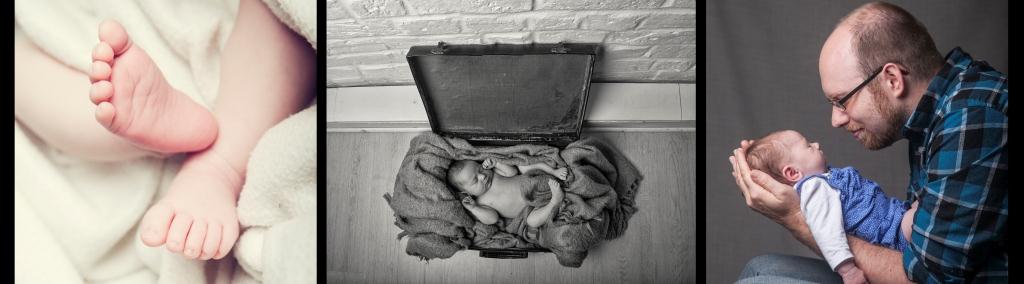
The Pain, the Pain!

When you’re a father, pain becomes a fairly common part of your life. Receiving pain is a given – Izzie stabbed me in the eye with a plastic knife yesterday, and has taken to ramming the corners of her hardback books into my throat, temples and ears. She also bites down on my fingers whenever I try to get something out of her mouth that shouldn’t be there, pulls my beard, grabs my bottom lip and twists it, jams her fingers up my nostrils, headbutts my nose, kicks me in the nuts (repeatedly), yanks on my ears, and occasionally jumps up and down on my stomach. Thank God I don’t have hair. This is before we mention the aches and strains of picking her up, carrying her, leaning down to hold her hand while we walk, and the million-and-one other repetitive actions of parenting.

But as I said, that’s a given – I’m a dad. Until she learns self-control, cause and effect, and appropriate social behaviour, these things are going to happen.

What I wasn’t quite so prepared for was the necessity to inflict pain upon my daughter – for her own good, of course. Not for discipline, I must point out, but for healthcare/first aid reasons. Unfortunately, when it comes to doing something like that, the job falls to me, and that’s something I baulk at.

Many years ago I started training as a nurse. I didn’t last very long because I just couldn’t get comfortable inflicting pain on others, even if it was to help them. ‘Cruel to be kind’ is a difficult concept in reality when the cruelty is self-evident while the kindness is measured at some indeterminate point in the future – giving injections might eventually make someone feel better somewhere down the line, but when you’re giving them, all you see is the grimace, the wince, the tears, or the blood. And ditto with inserting nasogastric tubes, performing enemas (although the benefits of this intervention were far quicker in coming, if I’m frank), or cleaning infected wounds.

The day I quit nursing was the day I was looking after an old chap with terminal cancer. He was in such pain that he couldn’t even have a bedsheet over him as the pressure on his skin was agonising. When he pooped himself – thick, sticky poop all over his bits – I was tasked with cleaning him up.

Imagine you’re a student nurse trying to wipe tar off the private parts of somebody who is screaming in pain. Imagine trying to do it delicately, knowing you are inflicting horrendous pain, and all the while your mentor is standing over your shoulder telling you to push harder, you need to press harder (and thus inflict more pain) to get him clean. And then she takes over and does it herself, matter-of-factly, calmly, quickly. Cruel to be kind.

He died later that day, and I left, because if my dithering and squeamishness prolongs someone’s pain then I’m in the wrong job. I understand the benefits of ‘cruel to be kind’, that we have to do it or he’ll get sore or infected and suffer even worse, but knowing that doesn’t make it any easier for me to inflict pain upon others. If I’d stayed I’d probably have become hardened to it, or else had a breakdown, but it wasn’t to be; and I have never had to inflict pain ever since.

So you can imagine my horror when I was putting my daughter to bed last night and noticed she had a splinter deep under her thumbprint, and another on the side of her palm. Neither of them protruding. Neither accessible with tweezers. And both of them my responsibility to remove.

When I was a child and my dad had to extract a splinter, he would grab a trusty needle, heat it over a flame to sterilise it, and then dig out the splinter with speed and precision. To the crescendo of my screams. Indeed, before he even got near me I’d be screaming – I’m surprised the neighbours never called the police. Given the fact my dad’s a very practical, down-to-earth, matter-of-fact kind of guy, I doubt he ever had any qualms or concerns about it. It needed doing so he did it. That’s what it is to be a guy.

But I am not my dad.

My chest tight, I prepared the needle over the hob and took it up to her room. The little one knew exactly what I was up to. She wouldn’t even let me look at her thumb, let alone hold it or touch it. At least when I was a kid, I sat still, kept my arm still, and screamed. No such luck with Izzie. It’s phenomenal just how much a toddler can squirm, and how strong they can be when they want, particularly when their cold-hearted father is burying the point of a needle in the soft, delicate, tender skin of their fingertip.

For anyone looking for advice, the technique is fairly simple: you scratch the skin along the line of the splinter to open it up, gently insert the point to carefully lift one side of the splinter up out of the wound, and then grab the end with tweezers and pull it out. Much easier if the victim, er, patient is held still and secure. Be prepared for screaming, tears, a red face, eyes that ask you ‘why, dad, why, I’m your daughter, why don’t you love me’, and the feeling that you’re the devil.

On the plus side, she got over it far more quickly than I did.

Post-extraction I searched the internet for easier methods and discovered that most said to soak the affected area for thirty minutes to soften the skin – but not with a wood splinter as that causes it to swell. Given that 99% of the splinters I’ve had in my life have been wood, and I don’t tend to let my daughter near jagged metal, it’s not exactly the most useful advice I’ve come across. Apparently applying magnesium sulphate will eventually draw the splinter to the surface, but when it’s bedtime and she’s already cranky and the splinters are hurting her, again it’s not the most helpful of techniques. Needle it is, then.

So let this be a lesson to all doting dads. I thought I could get away with being a caring, gentle, nurturing father, catering for my daughter’s emotional, intellectual and spiritual needs, but that’s not enough. There are times when you have to be practical, pragmatic and hard-hearted, and do what needs to be done in spite of the tears, the screams, and your own tender sensibilities. But that’s what being a parent is about sometimes, and if you can bring yourself to do it, you’ll be a better parent and be justly proud that you achieved something you never thought you’d be able to.

My Psychokinetic Child

The oddest thing I’ve ever experienced happened this afternoon. I’ve spent my life hoping to encounter something supernatural that I couldn’t dismiss out of hand as the result of some highly improbable yet entirely possible set of circumstances, and I very nearly got it today thanks to my psychokinetic child.

The facts of the matter are these: My mother-in-law treated us to pizza for lunch. Lizzie, my wife, drank a glass of Coke during the meal. While we were waiting for the bill, my daughter leaned over and lightly touched the empty glass with her fingertip. And the glass literally exploded.

This is one of the few occasions in which the word ‘literally’ is used accurately, because we’re not talking a slight cracking here, no; we are talking about an incredibly loud bang that shattered the glass and sent a thousand razor-sharp fragments flying in every direction across a circle with a diameter of six feet, one of which cut open my mother-in-law’s finger, but luckily left the rest of us untouched. Bewildered, confused and a little bit apprehensive, but unharmed nonetheless.

It didn’t sound or behave like a glass on a table top falling over and breaking, and nor did it sound or behave like a glass being knocked off a table to smash on the floor. Instead, it sounded and behaved like a glass being dropped onto a table from the ceiling. Every conversation in the restaurant instantly died as fifty diners turned as one to work out what could have caused such a violent breakage. A waitress who saw it happen was shocked and seemed wary of approaching the table, casting sideways glances at my daughter as she helped us clear up.

My first thought was that somebody had shot the glass, such was the energy of the explosion. My second thought was that my child has psychokinetic powers and released a burst of energy that shattered the glass. As I said, it was the weirdest thing I’ve ever experienced.

Alas, being something of a sceptical rationalist, a saner head started to prevail. The glass had contained ice, which caused it to contract; as the restaurant was on the quayside at Portsmouth, the sun reflecting off the sea and pouring in through the window caused the glass to expand; and the resulting tension between these two opposing thermal forces created a wellspring of potential energy awaiting the tiniest impetus to release. When my daughter touched the glass with her fingertip she exerted just enough physical stress to trigger all the pent-up tension, which caused the glass to explode. Nothing supernatural or special. Unusual, granted, but not beyond the realms of scientific possibility.

Damn it.

So I won’t have to check my daughter’s scalp for a suggestive birthmark when I give her a bath this evening.

Unless it happens again, of course…

How Fatherhood Changes You

I’ve been putting off writing this post, for reasons that will become clear later. For now, suffice to say, my head has not been in the right place.

They say that parenting changes you, but I’m not so sure that’s the case. I always figured it simply brought to the fore those qualities you already had lying dormant within you – self-sacrifice, responsibility, generosity, and what have you. Being a dad hasn’t made me who I am – it has simply shone a light on some of those hitherto undernourished and unappreciated aspects of my character and allowed them to flourish. For better and for worse.

I’ve mentioned many times before how parenting has brought out my paranoia, so much so, in fact, that it’s not worth repeating it here. I’ve also discussed how fatherhood has turned me into a crap dancer with a penchant for atrocious puns, but I’m pretty sure these things are normal.

Slightly more tragic was my wife’s revelation, a couple of weeks ago, that I have become rather boring.

Boring!? Surely not. I’m still young. I’m still energetic. I’m still…actually, she has a point. I have become a little old of late.

See, when you spend the better part of your day looking after a toddler, especially when you define your role as keeping her safe, you tend to become a little over-serious in your outlook. Couple that with being knackered all the time, and I invariably greet my wife’s ‘let’s go to the pub, let’s go to the park, let’s go to the shops, let’s go to the zoo, let’s go to Spain’ with ‘can we not and just say we did?’ Which, admittedly, isn’t the behaviour of the young, vibrant dad I set out to be.

So I have tried to soften a little. My wife Lizzie said she wanted me to be more juvenile, more playful, more fun – so I pinged her bra strap. Apparently, this wasn’t exactly what she meant. Nor was hiding her breakfast/drink/phone every time she glances away. And shooting her in the back of the head with a Nerf gun was very much a bad idea.

But things seem to be a little better. There are more pillow fights and visits to soft play, less arguing about risk assessments and budgeting. That’s one of the compromises you have to make as a parent.

The other MASSIVE change I have noticed in myself as a result of fatherhood, and something that is affecting my life, is my level of sensitivity towards anything that connects parenting, children and pregnancy with suffering, pain, disappointment and death.

Perhaps because of my autism, I’ve always been more sensitive towards the suffering of animals than people. In fact, I used to get myself so upset over nature shows that I couldn’t watch them as a child and I avoid them as an adult, whereas I loved true crime – it didn’t matter how nasty or gruesome it was, it didn’t really affect me. I’ve read all about James Bulger, JonBenet Ramsay and the Lindbergh Baby. I even did my Masters dissertation on infanticide, researching over four-hundred newborn child murders in Victorian Hampshire without batting an eyelid.

But fatherhood does something to your sensitivities. I first noticed it when my wife was expecting. I decided to reread Moon Tiger by Penelope Lively, which I did for A-Level, and despite knowing for twenty years that there’s a miscarriage scene, despite never having been bothered by the miscarriage scene, I read the miscarriage scene and started to cry. Weird, I thought – it’s the woman who’s meant to get hormonal.

When my Izzie was born and placed in an incubator, and my wife Lizzie was haemorrhaging and having transfusions, I sought out the hospital’s chapel for some rest and reflection, despite not being at all religious. Inside they had a prayer tree, with prayers written on paper leaves and pinned to the branches. One simply had a name, a date two days previously, and two devastating, soul-destroying words: ‘born sleeping’. Let me tell you, it killed me.

Since then, every time I hear about a miscarriage or a still birth, I well up. But it has become worse as time’s gone on. The more I’ve grown into my role as father, the more afraid I’ve become at the prospect of losing my daughter, whether through illness or accident, the more sensitive I’ve become to the suffering of all children. And I don’t know if sad stories about children are in the ascendancy at the moment or if I just never noticed them before, but they seem to be everywhere.

I cried over Ben Needham. I cried over the little boy killed by a dog a few weeks ago. Standing behind the counter of the children’s hospice shop I work in, I cried at the pictures of children with tubes in their noses, despite having seen them hundreds of times before. I cried at photos of children bloodied and shell-shocked in Syria. I’ve cried, and I’ve cried, and I’ve cried.

And then two weeks ago I saw this picture, and all the other tears I’ve cried seemed as nothing [WARNING: DO NOT CLICK LINK IF SENSITIVE]. It is a photo of a little girl called Jessica Whelan who is dying of neuroblastoma, and instead of the usual pictures of cancer kids – visiting Disneyland, playing games, smiling and ‘being brave’ – it captures the reality of a terminally ill child. The pain, the sorrow, the indignity, the goddamned unfairness of it all. And since then, my emotions have been all over the place.

People say, ‘I can’t imagine what that must feel like for the parents,’ but the trouble is, as a father I can imagine it, and just imagining it is more pain than I can bear. But I can’t escape it because it’s in my head now. I lie awake in bed at night, wondering about the letters I’d write to my daughter if I was diagnosed with terminal cancer; I wonder how she’d cope if I wasn’t here; but more, I wonder how I’ll cope if she’s the one with the cancer, and how I’ll explain it to her, and how the world can be so fucking cruel.

The truth is, what we as parents, and what I as a father, have to learn, is that our children do not belong to us – they belong to the Universe. We are only borrowing them for a time. So we have to make the most of every day, build happy memories for however long we are gifted with the opportunity to do so, because it could all come crashing down in a heartbeat.

And in the meantime, I need to learn to stop holding on so tight, find a way to stop crying all the time, and work out how to grow a thicker skin, or else I’ll be an emotional wreck before the year is out.

The Winter Vomiting Bug

If you want to know about the aetiology of the Winter Vomiting Bug – or stomach bug, norovirus, rotavirus, gastroenteritis, or whatever the hell else you might want to call it – then read on, for I am now an expert.

First, despite the name ‘Winter Vomiting Bug’, you need to be aware that it doesn’t limit itself to just one end of the body – the explosions can come from pretty much anywhere it chooses, and often both places at once. Also, it isn’t restricted to winter – it crept into our house in the spring, and returned to provide some entertainment in time for Halloween, which is really autumn. In fact, since the name ‘Winter Vomiting Bug’ is only a third accurate, it should really be called the ‘Anytime Puking Squits Bug’, because that’s exactly what it is.

What are the symptoms? As you can gather from the (new) name, it causes guts ache, vomiting and diarrhoea. In this current manifestation, the vomit is rather neat and tidy, taking the form of a solid mass wrapped in a transparent sac of phlegm – kind of like boil-in-the-bag fish, only with more carrots. And a real powerful aroma of fermented apples, like the cider bums that sit on park benches.

I know this because when my darling daughter started to vomit at 1am while sitting in the centre of the carpet, there was nothing in range to grab, so I had to catch it in my hands. This is one of the unexpected pleasures of parenthood. But she seemed instantly more comfortable in herself, so that’s a plus.

Meanwhile, the diarrhoea is – well, diarrhoea. There’s not a lot else to say. A slightly sweet, fruity bouquet, but otherwise exactly as you’d expect.

What is the disease progression? Within twelve hours (of catching vomit in your hands), you get a real bad case of stomach cramps, relieved by burps that taste of fermented apples (at which point, you go, ‘Oh crap, I’ve caught it!). Over the next few hours, the cider burps develop an aftertaste of bacon. Gradually, these burps become more frequent and lose the apple taste altogether, now reminding you of those little burnt bits on the bottom of fried eggs. And then, as it starts to feel as though you’ve swallowed a sea urchin shell that’s rolling around in your stomach, you realise you’re going to be sick, and that as soon as you have you’ll feel better, but it’s going to be a while yet.

What’s the incubation period? I have this down – 23 hours, 37 minutes. Because that is precisely how long it took between getting vomit on my hands to experiencing the pleasure for myself. It is a particularly violent form of retching – my wife Lizzie ran around in a panic screaming ‘you’re going to die, you’re going to die!’ – and it feels like someone is smacking you in the gut with a sledgehammer, but as soon as you’re done you feel as though you could run a marathon – albeit, a marathon with regular toilet stops as the other end remains a little unpredictable.

How long does it last? Now the good news: about a day. The vomiting/diarrhoea explosions are fairly concentrated into a period lasting between a few minutes to a few hours. It’s a long time coming, but once it hits and it’s over and done with, you feel much better. Admittedly, you wonder why you can’t remember being kicked in the stomach by an entire rugby team, but it’s much easier after the explosions than before. The fragile belly lingers for a few days after, and you’ll have plenty of loose stools, but eventually it fades.

Is it contagious? Oh God yes. My wife had it first, about two hours before my daughter, so I had to tend to both at the same time. I used anti-bacterial soap and scalding water every couple of minutes, especially after handling vomit and poop and every time when moving from one patient to the other, but I still managed to catch it.

What’s the long-term prognosis? An aversion to cider. Red skin on your hands. An intimate knowledge of the inside of your toilet bowl. And, if you’re anything like my daughter, a chesty cough and cold that leaves you snotty and spluttering and miserable for at least a week.

The other night she woke up screaming 21 times. Sixteen times I dragged myself out of bed, put her dummy back in, placed her on her belly, rubbed her back until she was soothed, and stayed with her until she was snoring again. Which, for the mathematicians among you, means a deficit of five. On those occasions, I lay abed in a soporific daze, battling to claw my way up to reality, unable to rise in the five or so minutes it took her to ‘self-soothe’ a.k.a. cough and scream herself to sleep.

So this, in a nutshell, is the Winter Vomiting Bug/Anytime Puking Squits Bug. If you know anyone who has it, avoid them like the plague, for they are carrying the plague – a plague of disgustingness you don’t want to unleash upon your family. Although, telling people you’re contagious is a great way to keep the neighbours from bothering you…

Alone and Afraid

It’s amazing how kids can unlock parts of you that have long lain dormant.

As an adult, it’s not often that I’m afraid. I was often afraid as a child, especially of the dark, but as soon as I realised there were no monsters hiding in the woods – no supernatural ones, anyway – that visceral, uncontrollable, preternatural fear that was programmed into our ancestors’ DNA to keep them safe faded into an erstwhile caution. Of course, having autism and social phobia, I’m used to an all-pervading anxiety, but out-and-out fear is a different entity entirely, and something I’m not particularly familiar with.

I’m far too rational, sceptical and sensible to feel true fear. I went through a period in my early twenties when I decided to test myself, so I did bungee jumps and threw myself out of airplanes, climbed mountains, descended into caves, watched every scary movie I could lay my hands on, visited witches and mediums, hung out in graveyards after dark, crossed rickety rope bridges, trekked through rainforests, slept in wooden huts on barren hillsides, and learned to scuba dive down to a depth of 100 feet in a place called Shark Bay. I’ve been nervous, sure; anxious, definitely; but afraid? Not really. I analyse, process, plan, prepare, adjust, and execute. Control the variables. Assess the risks. And trust in myself. What’s to fear?

Which is why I was thoroughly unprepared for how afraid I felt in the early hours of Saturday morning.

Late Friday evening, my wife Lizzie fell ill. Like, end of the world in a frying pan ill. So I packed her off to bed early with a hot water bottle and a handful of drugs, and the understanding that she would be of no use for at least the next 24 hours. If the house caught on fire, the dog grew an extra head, the chickens started eating meat, or the fish learned to fly, it would be up to me to keep it all together. But I’m used to that, so without a care in the world I put the baby to bed and settled down to a pleasant evening of reading/watching TV/killing aliens, depending on which took my fancy.

Half midnight, my daughter Izzie started screaming. So far, so normal. Except this screaming didn’t stop when I put her dummy back in and laid her back down in the cot. If anything, it got worse. If anything, it was the worst screaming I’d ever heard.

I picked her up, I cuddled her, I sang to her, I danced, I whispered, I begged, but she only grew more agitated, trying to fight me off, choking on her own screams. I took her downstairs, tried milk, tried water, tried biscuits, all to no avail. She was frantic, distraught, so agitated I thought she might suffocate or have a fit. Her face was bright red, her expression horrible. Tears and snot and dribble were everywhere, making her choke, and still the dreadful sobs, the heart-rending screams. Oh God, I just wanted to be able to do something, anything, to help, to stop the screaming, the distress writ large across every aspect of her being.

And it was then, one in the morning in the lounge, unable to do a thing to comfort my daughter and knowing I was totally alone, that I felt afraid. Terrified, in fact. And there was something instantly familiar about this fear, because I’d felt it before. When I was twelve. In a heartbeat, I was twelve again.

This story begins when I was ten. We were on holiday in Spain, and with my twelve-year-old brother, we befriended an older boy on the campsite. I suppose he must have been about fifteen. At some point we went to the swimming pool, at dusk, unsupervised, which was fine because my parents were having drinks with his parents in the caravan awning and he seemed a nice kid and there was a lifeguard and they told us to stay at the shallow end and this was completely normal. But that night wasn’t normal at all.

In the pool he had a couple of other friends who were a few years older than him. One of them had long hair and stubble and I’m sure was eighteen, the other maybe seventeen. And at some point, the three of them thought it would be fun to drag little ten-year-old me out of my depth into the middle of the pool and duck me under the water.

The sky was dark by then. I wasn’t a big fan of water. I hated being under the water. They held me under. I writhed, I fought against them, my arms flailing. My terror seemed to amuse them. They ducked me again and again. I couldn’t touch the bottom. They’d let me up for a breath then hold me under again. My brother watched from the shallow end. Each time my head broke the surface my ears would ring with their laughter. They kept passing me between them. Sometimes they’d let go, and I’d try to swim away but they’d grab me and start up again. I thought I was going to die. Between mouthfuls of water I screamed at the lifeguard for help. He watched with a smirk on his face – the one adult, the one person who was meant to keep me safe, enjoyed my suffering. I was frantic.

Eventually, they let me get too close to the side – I grabbed the metal steps. They were bigger, holding onto my arms, and there were three of them, and they certainly didn’t want me to escape and ruin their fun, but there was no freaking way I was ever going to let go of that railing – I thought that if I did, I would die, and thus I literally clung on for dear life until I managed to drag myself from their grasp.

Afraid they’d now target my brother, who was stupidly sitting in the shallow end, completely oblivious to the danger, I shouted at him to get out and fled from the place I had been sure I would die. Maybe it didn’t look so serious from the outside. Maybe they only held me under ten seconds at a time. But if you’ve ever been held under water by strangers when out of your depth, ten seconds might as well be a lifetime. I was traumatised.

Skip forward a couple of years. We were on holiday in the south of France with three families my parents were friends with, each of whom had kids the same age as my brother and me. We spent a day at a lake and, in two inflatable canoes, the eight of us kids paddled out to an island in the middle. It was meant to be great fun, exploring the unknown – I was excited by it. It might even have been my idea. But it went horribly wrong the moment we got there.

The second my feet hit the sand, I freaked out. It was, without a doubt, my first panic attack. The rest of the kids ran up the beach, darting about the rocks, climbing into the dunes, flitting about the bushes – I sat on a boulder, hugging my knees and rocking forward and back, my skin crawling and every sense telling me that something was wrong and I wanted out. I asked to go back, I demanded we go back, I kicked up such a fuss and ended up so crazed they finally boarded the boats and we set off.

The end of this affair was captured on that ultimate early-90s status symbol – the camcorder. My parents filmed our return journey, the arguing in the boat, and my decision to leap into the water half-way across and swim the rest of the way to shore as it was taking too long. It even made it onto our yearly Family Video – that kooky Gillan, what’s he like?

My brother put my behaviour down to me being an arsehole, and my parents probably agreed – in all fairness, erratic, disruptive and destructive behaviour was hardly out of the ordinary for me, given I had autism and it wouldn’t be diagnosed as such for a further sixteen years. But the feelings that triggered the episode were certainly new, and being an introspective sod, even as a twelve-year-old, I decided I had to get to the bottom of why it happened.

Ultimately I realised that my fear on that beach beside a lake in the south of France was a direct result of my experience two years earlier in a swimming pool in Spain. The moment I stepped out of the canoe I was alone with a bunch of children, no adults around, no rescue, no safety, and my vulnerability in that situation was more than I could bear.

In the early hours of Saturday morning, as Izzie screamed and choked and sobbed, while upstairs my wife lay ill in bed, I was back on that beach. I was a child again, with nobody to save me, nobody to protect me, only myself to rely on in all the world. I had no idea what to do. I was trapped in the situation as surely as I had been years before in a swimming pool at dusk. And I was afraid.

I hadn’t thought of those experiences in years. I hadn’t felt those feelings in forever. I have been an adult almost all of my life. My daughter made me a child again.

And then she vomited all over me.

And I’ve never been so relieved.

A Father’s Role


In the olden days – like, the really, really, really olden days – a father’s role was simple: catch food, drive your enemies before you, hear the lamentations of their women. Okay, maybe that’s not exactly simple, especially when all you have is a wooden club, but cavemen knew what it was to be men.

Years later it was decided that, while the father still had to provide for their children, they should also guide them towards successful adulthood by administering discipline, principally using ‘the rod’, ‘the birch’, ‘the staff’, or ‘the belt’, depending on their particular inclination.

Then we had this pesky thing called the sexual revolution, in which women decided they no longer wanted to sit around raising babies, baking cakes and waiting for their husbands to give them their pocket money, and instead go out and earn money for themselves. No bad thing in itself, but it upset thousands of years of a clear gender split in parenting roles.

The father is no longer the provider, because the mother can do that too. He’s also equally expected to help out with the night feeds, change nappies, give baths, nurture, cuddle, sing songs, mollycoddle, encourage and entertain. And discipline is hardly an exclusively masculine preserve. As a result, many men have lost their way, with nothing they can cling onto as an exclusively XY domain, unlike women, who have a sacrosanct arena of XX dominance: no matter how much I might want to, I shall never be able to give birth, breastfeed, or discuss pelvic floor exercises with my girlfriends – at least, not without embarrassment.

The thing is, we men are full of testosterone, ready to contend with nature red in tooth and claw, but there’s little call for that on the way to the chemist to get more baby wipes or when choosing between pink paint or floral wallpaper. So modern man channels all his brutish, preternatural manliness into the one thing we can make our own, and in this find fulfilment and transcendence: personal safety.

You mothers can wander about with the baby, smell the flowers, watch the sunshine; we fathers will protect you. That’s something we can do. That’s something you have to let us do so we feel like men. While you play in the play park, we’ll stand sentry, intercepting any and all potential dangers and inconveniences. We are a cross between Secret Service agents, bodyguards and ninjas. We stand ready to do violence upon those who would harm us and ours. We are men. Hear us roar! Miaow!

Trouble is, since I became a dad, I’ve realised that the world seems to have become an incredibly dangerous place, and I’m not at all sure I’m up to the task. Every hitherto friendly dog I pass in the street is now a potential child-killer, just waiting for me to drop my guard so it can maul my baby to death. I’m not just talking about Alsatians and Rottweilers – the village is full of prissy little Lhasa Apsos, fluffy, self-important, ten inches tall, all of whom will turn into Cujo if I’m not watching them. That’s without mentioning the cats, the size of tigers, that prowl between parked cars, sharpening their claws as they lust after toddler blood. It’s a freaking jungle out there, people.

And people too. The postman has morphed from a friendly chap who delivers the mail into a blood-thirsty psychopath who wants to take my baby away with him in his post bag. Elderly neighbours ask us if we have any plans for the day: why do you want to know that, are you planning on ambushing us and stealing our baby? You would not believe just how many kidnappers lurk around our village, ready to steal my nearest and dearest if I look away for even a second. Man with walking stick = man with offensive weapon, best avoided. Every bush, every tree, could be hiding the human equivalent of Rumpelstiltskin, and it’s my job to keep these bastards at bay.

Then there are the drivers. One mile an hour over the speed limit is one mile an hour too much: ‘Slow down, Lewis Hamilton, you’re not in Monaco now!’ The car park at the supermarket has changed from a place to dump my vehicle in order to purchase goods into a nightmare murderfest organised by the prison guards in Death Race 2000, filled with elderly people who reverse without warning and ignore the one-way traffic-flow system, yes, ignore it! And by the end of each car journey these days my eyes are bloodshot from glaring at every person along the way who has the potential to cause an accident which might harm my daughter – which, to be frank, is all of them.

Nature is just as violent. I see dog poo and wonder what diseases it might be able to pass on; I look at the sky and ponder whether or not little Izzie will make it home alive if the weather changes suddenly; I question if the trees I have walked under a thousand times will choose this day, this moment, to come crashing down upon us. Are those cows going to stampede? Can that bull get out of the field? Is the slurry pit giving out noxious gases? What if? What if? What if?

And that’s just outside the house. Inside, I’m increasingly suspicious that the TV might mean my daughter harm, or the dishwasher, or the tumble-dryer. Radiators are steam-filled pipe bombs, the boiler wants to kill her with carbon monoxide, the toilet is full of water to drown her in, the bedding can suffocate her, the plug sockets might arc electricity across the room, the carpet might cause burns, the food might poison her, the picture frame might brain her as she walks past and there’s the ever-present threat of the sofa swallowing her whole. I lie awake at night wondering if I’m doing enough to keep meteors from crashing through the roof or foxes from scaling the walls and sneaking inside through the air vents.

My parents asked me what I want for my birthday.

‘A fire extinguisher,’ I said.

All in all, I’m coping really well with my paranoia. But this, you see, is a modern father’s principal role: keeping our children safe. It’s what makes us men. It’s all we’ve got. Don’t take it away from us. Because you’ll need us when the zombies come.

Provided we haven’t worried ourselves to death first!

Mummy’s Girl

Izzie’s first word has well and truly arrived. I’m not talking about the rather funny imitations she does – pronouncing buzzard as ‘buggered’ and beach hut as ‘bitch hoe’ – no, this is a real, bona fide, unmistakable word, used without prompting and in the appropriate context.

Unfortunately, that word is ‘mummy.’

I say ‘unfortunately’ because now that she has learnt the word, she has decided to use it in earnest. ‘Mummy, mummy, mummy,’ she says as she wanders about the lounge. ‘Mummy, mummy, mummy,’ she mutters when she’s supposed to be napping. ‘Mummy, mummy, mummy, mummy, mummy.’

This is a particularly galling word to hear when you’re a daddy, and you’re the one getting her up in the morning, or changing her nappy, or bathing her, or feeding her, or playing with her, or cuddling her, or all of those things you do that you really wish she’d be grateful for, and for which she might reward you by saying ‘daddy’. It’s hard to remain upbeat at three in the morning when she wakes you up crying, and as you try to settle her down all she can say is, ‘mummy, mummy,’ as she gets snot all over your shoulder. And it’s rather difficult not to feel a little aggrieved when you put her to bed, kiss her cheek and bid her goodnight for her to reply, ‘mummy, mummy.’

You might think she’s simply saying the word without knowing what it means, or because she likes the way it rolls off the tongue, but you’d be wrong because she knows exactly what it means. I’m not sure which came first, her obsession with the word or her obsession with her mummy, but she’s decided that mummy is the coolest person on the planet and daddy is just some guy that mummy lives with. Yes, I have been pushed aside in favour of a person with bigger boobs.

Who does Izzie want to see in the morning? Her mummy. Whose lap does she want to sit on? Her mummy’s. Whose hand does she want to hold when we walk down the street? I’m sure you can identify the pattern in this. I jokingly asked her this morning who her favourite parent is (like she’d be able to understand, ha!) – and she pointed at Lizzie and said, ‘mummy.’ Ouch. In retrospect, I’m not sure what I was hoping to gain from that question!

Following quickly on the heels of Izzie’s first word came her first full sentence yesterday – we often show her how to do something and then say, ‘Izzie do it,’ so when she was struggling to fit the shapes through the correct holes on her toy, she picked it up, plonked it down on Lizzie’s lap, and said, ‘Mummy do it.’ It was a revelation to her – now she can ask mummy to do everything!

It has been a week since this started, and while Lizzie initially rubbed it in – ha ha, she’s not saying ‘daddy’, is she? – even she’s getting a little tired of the constant, ‘mummy, mummy, mummy’. More worryingly, when I tried to kiss Lizzie earlier, the little tyke clambered up into her lap and started slapping me in the face, as if to say, ‘Get away from my mummy, you horrible man, she’s mine, all mine!’

A few weeks ago she was definitely a daddy’s girl. Now when I cuddle her she reaches out for mummy. I figure this is all just part of growing up, and toddlers being toddlers, and it’s not like Lizzie and me are in competition. Still, I’m looking forward to the day that as I close her bedroom door I’ll hear the words, ‘Night, night, daddy.’

Casualties of the Parenting War

There’s a line in The Hunt For Red October where defecting Russian submarine captain Marko Ramius says something along the lines of, ‘It’s a war without battles, without monuments…only casualties’. He’s talking about his dead wife at the time, but I’ve always taken it as a description of the Cold War as a whole: two great nations circling one another like prize fighters, watching, waiting, testing, provoking, through storm and shine, day and night, summer and winter, year on year, the dead on each side mounting up from accidents, collisions, clumsiness, fatigue, bravado, without a shot being fired or any open form of hostility being declared.

The relationship between parent and child is a lot like that.

I have been kicked in the nuts more times in the past few months by my daughter than I ever was by the jackasses I went to school with, and believe me, I used to get kicked in the nuts a lot. I’ve been punched in the face, headbutted on the nose, had fingers rammed into ears and nostrils and down my throat, been strangled, throttled and choked, and had almost every hair on my body pulled, tweaked or ripped clean out. At the moment she enjoys jumping on me, hitting me, throwing things at me and smacking me around the head with whatever’s at hand. And lately she’s discovered the joys of poking her plastic toy forks in my eyes – cheers for that, sweetheart!

Then there are the accidents: as a person with autism, I have a tendency towards clumsiness, which generally translates to walking into things, banging my head on things, tripping over things, and falling down a lot. Many times I’ve hooked my foot around the leg of Izzie’s high chair, refrained from grabbing onto it as that would be dangerous, and thus fallen like a ton of bricks to the floor. Many times I’ve been holding her hand in the street and watching to make sure she doesn’t walk into anything, only to crack my shin on a bollard myself. And getting her lunch out of the oven today, I burned the back of my hand on the shelf.

The worst thing at the moment though is my back. The other day I was opening her pushchair on the quayside, pressed down on the foot-plate, got my shoelace caught in the mechanism, and fell flat on my back in front of a whole cohort of leather-clad bikers, pulling the pushchair over on top of me, bruising my ribs and wrenching my spine and shoulder in the process – I couldn’t lift my right arm for hours after.

Perhaps as a result of this fall, or perhaps because I carried her around on my back up and down cliffs and over hill and dale all last week, I made my back susceptible to further damage. You see, I have a semi-slipped disk in my spine, not bad enough to do anything about, but bad enough that every few years it trips and leaves me bedridden for days. And it’s tripped.

A couple of days back I put Izzie in her cot for a nap, bent down to pick up the nappy I’d just changed, and the next thing I knew I was on my elbows and knees with my forehead pressed into the carpet and my lower back muscles in agonising spasm. And a poopy nappy right under my cheek. Luckily, although I can barely walk, hobbling around like the Hunchback of Notre-Dame, I can actually walk. For now. Izzie still needs putting in and out of her high chair and her cot, bathing, changing, dressing and all the other back-breaking tasks of parenting, and in spite of the pain, it’s what you have to do. But in all honesty, it hurts like hell.

For her part, Izzie has the good grace to freak out every time I fall down and hurt myself. And it’s not exactly all one-way traffic.

When she was on my back last week, I did on one occasion walk under a low branch and hear a rather dramatic thud. More than once I’ve knocked her head on the top of the car door when I’ve been putting her in her car seat. She tried to run away from her shadow the other day, tripped and face-planted on the patio, tearing open her knee. A couple of weeks ago I was lying on my back on the floor when she charged at me and stumbled, slamming her head against mine and cutting her chin open on my tooth (I felt so freaking guilty as the blood poured down my T-shirt!). And every day she adds to the bruises on her legs and arms and forehead as she trips and falls and bashes into things and bounces off your knee and tumbles off the sofa. It’s a jolly good thing toddlers are resilient or else she’d feel as rough as I do now!

And that, fair readers, is one of the little-discussed aspects of parenting: without battles, without monuments, you will injure the crap out of each other. There will be blood, there will be tears, and sometimes you’ll feel like you’ve gone ten rounds with Mike Tyson, but ultimately you’ll look back on it and laugh – that is, unless she puts your eyes out first!

The Fear

This week I encountered The Fear. He was on a holiday park in North Devon, of all places, roaming between the static caravans that sit on a hillside overlooking the bay. I’m pretty sure most parents meet him at some point, but this week was my turn.

I’ve been anxious about Izzie before, concerned about her safety, worried about the future, but it’s always been small scale, fantasy-land fear, the kind you get before the dentist or a particularly unpleasant meeting – you’d rather avoid it, but you know that if you have to face it, you’ll get through the discomfort because it’s not really actually all that bad. The Fear is another matter entirely.

It crept up on me unannounced. Everything was fine – a bright, crisp morning, fluffy white clouds scudding across an azure sky, the ocean stretching out below us towards the horizon. Lizzie was walking down the hill holding Izzie’s hand and while I locked up the caravan, my little girl looked over her shoulder at me, the breeze tousling her hair. Her face was a picture of innocent joy, her toothy smile so infectious as she waved at her daddy that in that moment I knew what it was to be loved and what true happiness felt like.

And an instant later I was struck by The Fear – the all-pervading, nausea-inducing, gut-wrenching, knee-weakening presentiment that I would lose her.

The closest I’ve come to this feeling before is when Izzie was around three months old. I went into her room in the middle of the night to check on her and she was so still and quiet I thought she was dead. My first thought – nay, instinct – was to travel to wherever she had gone, because she needed me and I couldn’t bear the thought of not being there for her. Short story even shorter, she wasn’t dead, she was just asleep – but the incident cleared up any lingering doubts about whether I truly believed in the hereafter.

The Fear wasn’t like this at all. It didn’t come from anything scary but from something joyous. It was as though upon reaching the heights of happiness, my body reacted and rebelled, viscerally and violently. Out of the clear blue sky I was filled with the most terrible and heartbreaking dread.

I’m not just talking about death, though that’s a given – cancer, meningitis, kidnap, murder, an accident, The Fear showed me it all – I’m talking as much about change. If I could have frozen that moment she waved at me with innocent joy, I would have done, because right now Izzie adores me – I’m the smartest, coolest, funniest, most-lovable chunk of a man she knows. But all that will change, and quickly too. My days as my daughter’s faultless hero are well and truly numbered.

I spent all that day with The Fear. Maybe, I thought, it’s here because I was talking to somebody about Seneca a few days ago, and his belief that your mind is the only thing you can rely on as everything else you can lose – friends, family, status, job, home, health, hair, all of it. Or maybe, I thought, I’m preoccupied with losing Izzie because police believe they might be days away from locating the body of Ben Needham, a British 21-month-old who went missing 25 years ago in Kos. Or perhaps it’s because I had the unfortunate experience of overhearing a fourteen-year-old girl and her mother screaming life-affirming statements at one another like, ‘I’ve effing had it with you,’ ‘you effing well ruin everything,’ and, ‘I wish you were effing dead!’

But that’s not it at all. If it was, The Fear would be with me all the time. No, it’s because in that moment of perfect happiness I realised my unbridled love for another person – and simultaneously my utter and total vulnerability. Izzie has me, heart and soul, and if anything happens to her, I would be destroyed. The Fear was a safety mechanism, a reality check, because I was walking too close to contentment, and believed my happiness to be immortal. Keep away from the sun, Icarus, or you’ll fall into the sea.

And that is the dilemma of parenting. You give yourself and hold nothing back, but in so doing you risk everything. Your fate is tied to that fragile, fickle bundle of cells you call your child. And the price for your joy is The Fear, cropping up when you least expect him, reminding you you’re dancing with a moonbeam that can never be contained.

But in the meantime, long live this moment.

Imitation, experimentation, and intuition

How do children learn about the world? This is the issue dominating my mind right now, partly because fourteen-month Izzie is learning at an exponential rate and partly because I’ve ploughed through Sophie’s World over the last few nights and 3000 years of philosophy compressed into 400 pages is enough to make anyone’s head spin.

You can get really deep and complex and ponder the effects of sensory perceptions and experience versus the influence of innate cognition and primitive, pre-verbal mental reasoning. But if I’m not mistaken – which I might be as I haven’t really been sleeping – I’ve been able to reduce the entire field of infant learning down to three key processes:

  • Imitation: watching and copying;
  • Experimentation: fiddling until you’ve figured it out; and
  • Intuition: good god, how the hell did you know to do that?

Imitation is pretty simple. Since Izzie has seen us drink from cans, whenever she comes across one she lifts it to her mouth as though drinking. She does the same thing with deodorant cans, so it’s not a foolproof system, but the idea is right.

The good thing about imitation as a learning tool is that you don’t have to teach her – she just picks it up. Watching us press the pointy end of the pen to paper, whenever she gets her hands on a writing implement she now seeks out a newspaper, TV guide, or daddy’s book so that she can make lots of lovely little squiggles. Seeing us use the sponge to wash her face, every time I bath her now she grabs it off me, wets it, and washes my face – usually covering me with water. And when we tell her we’re going out, she grabs our shoes and tries to put them on our feet to help us get ready quicker – or not, as the case invariably is.

On the other hand, the bad thing about imitation as a learning tool is that you don’t have to teach her – she just picks it up. So when mummy playfully throws one of the baby’s cuddly toys at me, Izzie discovers that wonderful game called ‘throwing things at daddy’, but instead of limiting herself to soft, light toys, she thinks it’s all fair – books, coasters, wooden blocks, the kinds of things that really hurt when they connect with your shin bone, or elbow, or forehead. Likewise, because she sees daddy turn on his Xbox by pressing the on/off button on the front and hears a terribly interesting ‘beep’, at random times she’ll toddle over and press it – even if daddy has been playing a game for half an hour and hasn’t saved it! And because she sees Ozzie the dog chasing the cat around the lounge, for the last few days she’s been terrorising Korea (in case you’re wondering, she’s a rescue cat and that’s the name we’re stuck with).

Experimentation is a slightly more cerebral process. It’s all about taking an object and figuring out its intrinsic physical qualities. Whenever Izzie gets a new toy she starts out by bashing it against things (how heavy is it? What noise does it make?), proceeds to bite it (is it food? What does it taste like?), and then turns it all round and decides which is the most enjoyable way of interacting with it. So she’s gradually discovered that it’s more rewarding to press the keys on the piano thing we got her from a car boot sale (plinky-plonky style) than slap it or slobber all over it – although I kind of wish she hadn’t. And she’s discovered that if she pulls the oven door on her toy kitchen really hard, she can yank it off and then throw it at daddy – thus combining experimentation and imitation.

She’s also been using experimentation to discover how, if something doesn’t work one way, another way might produce a better outcome. Hitting her xylophone with the end of the beater that the string was attached to made a muffled thudding sound; now she uses the proper end and smacks the crap out of those metal bars with the volume and melody of a pneumatic drill. Drawing on paper with marker is all well and good, but drawing on her legs and/or dress gets a much more exciting reaction. And if she wants me to read her a book, she brings it to me and puts it on my lap, and if I don’t read it, she hits me with it, which is equally as fun.

You see, Izzie also experiments by varying causes to provoke multiple effects – a long-winded way of saying she tries various methods to manipulate her parents to get what she wants. Screaming, crying, stamping her feet, balling her fists – and if daddy doesn’t give in, she goes to mummy and repeats the process, and vice versa. She likes to point, to say ‘uh’ to indicate ‘that’, and failing that, to reach for it and clamber up on the furniture and move things about until she either gets it or gets given an equally attractive alternative. And if you’re walking in a direction she doesn’t want to go, she’s discovered that instead of resisting, screaming or crying, she can just go limp and sink down to the ground like a puppet with its strings cut, refusing to budge until you turn the other way, whereupon she springs into life like Popeye with spinach in his belly. Too clever for her own good, that one.

Which brings us to the final learning process: intuition. Or rather, instead of a learning process it’s more like a remembering process because I have no freaking idea how to explain some of Izzie’s behaviours beyond the possibility that past lives exist. These are the things she does that she has not witnessed so can’t be imitating, hasn’t experimented with, and by rights should not have the reasoning power or cognition to achieve.

Like a few weeks back when I drank a Coke from a glass bottle and left it with a few dregs in the bottom on my father-in-law’s lawn. A few minutes later, Izzie totters over, picks up the bottle, sees it has some left in it, carries it over to the table, pours it into a glass, puts the bottle on the table top, picks up the glass, knocks back the Coke in a single gulp, puts the glass back on the table and toddles off again. If there weren’t other witnesses, I would have doubted the evidence of my own eyes. We’re not the kind of people who pour drinks from bottles into glasses – we drink it from the bottle or else drink cans – so where did that come from?

Similarly, I was bathing her the other day when she picked up her mum’s lady razor from the side of the bath, and despite never having seen or touched one before, proceeded to shave my forearm. Had it not had the plastic cover over the blade, I would have an arm as bald as an Olympic swimmer’s. The thing is, holding a wiggly-handled lady razor is quite a skill for a baby, especially getting it the right way up and to then run it down my arm multiple times in perfect imitation of a person shaving – where did that come from?

My mum took her to a toy shop and after looking around for a few minutes, Izzie took a box off the shelf, lay it on the floor, and then pressed it repeatedly with her foot. So far, so normal, except that inside the box was a mat you put on the floor then press with your foot to make noises – so how the hell did she know to do that?

And the other day we gave her a yellow duster, and what did she do with it? Yup. Started dusting the surfaces. I can guarantee she’s never seen us do that before!

So here is my treatise on child learning: imitation, experimentation, intuition…unless my daughter is the reincarnation of a Coke-drinking, music-mat-playing barber who likes cleaning, in which case I’m not sure I can generalise using her as my case study.